Watching Good Will Hunting is like reading a Love Letter to Men and here’s why.
 June 17, 2025
 Let's get into it.
Directed by Gus Van Sant, written by the infamous actors, Matt Damon and Ben Affleck who star alongside Robin Williams in the movie, Good Will Hunting is a poignant, unflinching exploration of trauma, vulnerability, and the lifelong work of healing — things many men continue to wrestle with under the veil of “being a man”. Watching the movie feels like reading a love letter that reminds men that they are not alone, and here’s why:
1. Addressing the Unspoken
Will Hunting, played brilliantly by Matt Damon, is a 20-year-old janitor at MIT with a genius-level IQ. He solves complex mathematical problems for fun but runs from any emotional intimacy or personal confrontation. Will masks his pain with arrogance, sarcasm, and physical fights — behaviors often normalized or even glamorized in male friendships and popular culture. The film highlights how men are often taught to bury trauma, avoid vulnerability, and never ask for help. Will embodies this — haunted by an abusive childhood, he’s built emotional walls so high, even he can’t see over them. And like many men, his default defense mechanism is anger.
2. Destigmatising Therapy for Men
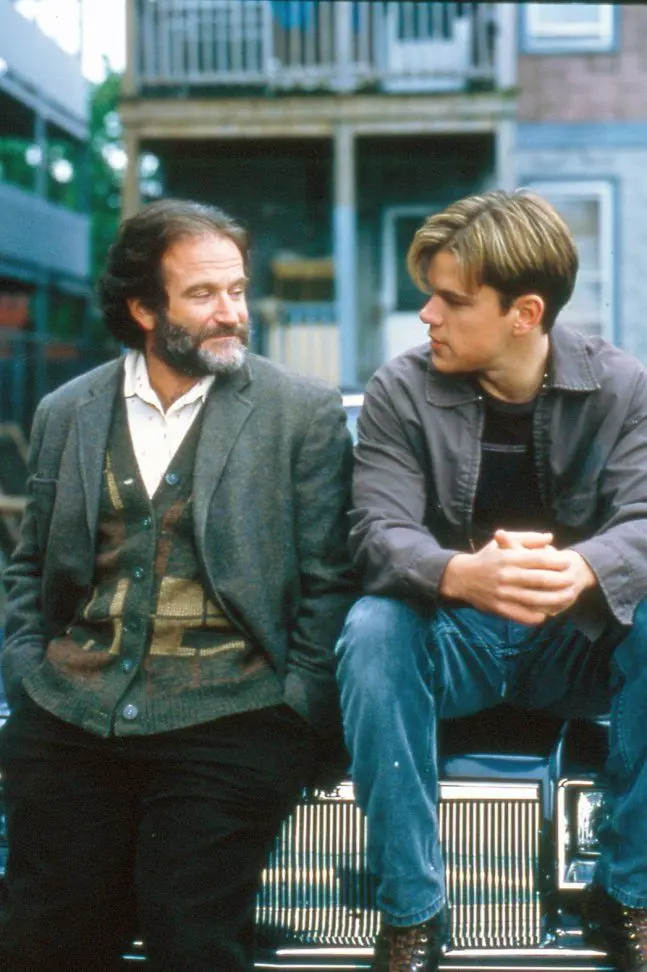
Enter Robin Williams as Sean Maguire — a therapist who isn’t the typical “head-tilting, softly spoken” stereotype. Sean swears, challenges Will, and meets him in the mess. This portrayal matters. Male therapy is rarely shown this way on screen: raw, uncomfortable, but transformative. Their therapy sessions are a masterclass in breaking down masculinity myths. Sean calls Will out, not to emasculate him, but to help him see that strength isn't about suppressing pain — it's about facing it. That vulnerability isn't weakness, it's courage. The iconic “It’s not your fault” scene is one of cinema’s most tender depictions of a man allowing himself to be emotionally held by another man. It’s a powerful reminder of how vital empathy, patience, and presence are in mental health support, especially in male friendships.
3. Breaking Male Friendship Stereotypes
Good Will Hunting also subtly celebrates healthy male friendships. Chuckie (Ben Affleck) isn’t just a drinking buddy. He’s Will’s anchor. In one of the film’s most underrated scenes, Chuckie tells Will that it would be a waste if he stayed in their neighborhood for the rest of his life, wasting his potential. It’s an act of tough love rooted in deep care — showing that male friends can, and should, push each other toward growth. It reminds us that male friendships should be about more than banter and beers. They should hold space for honesty, challenge, and emotional depth.
Summing it up...
If these reasons aren’t enough, we can only urge you to watch the movie and understand the relevance for yourself. Good Will Hunting isn’t just a story about a mathematical prodigy. It’s about every man who’s been told to “man up” instead of cry. Every guy who’s worn anger like armor. Every friendship that’s saved someone from themselves. And every therapist, mentor, or friend who’s quietly stood beside someone as they did the hard work of healing. It’s a reminder that seeking help is strength. That we all deserve someone who’ll patiently sit with us until we’re ready to say: “It’s not my fault” . If you haven’t watched it, or haven’t revisited it in a while, maybe it’s time.
June 17, 2025