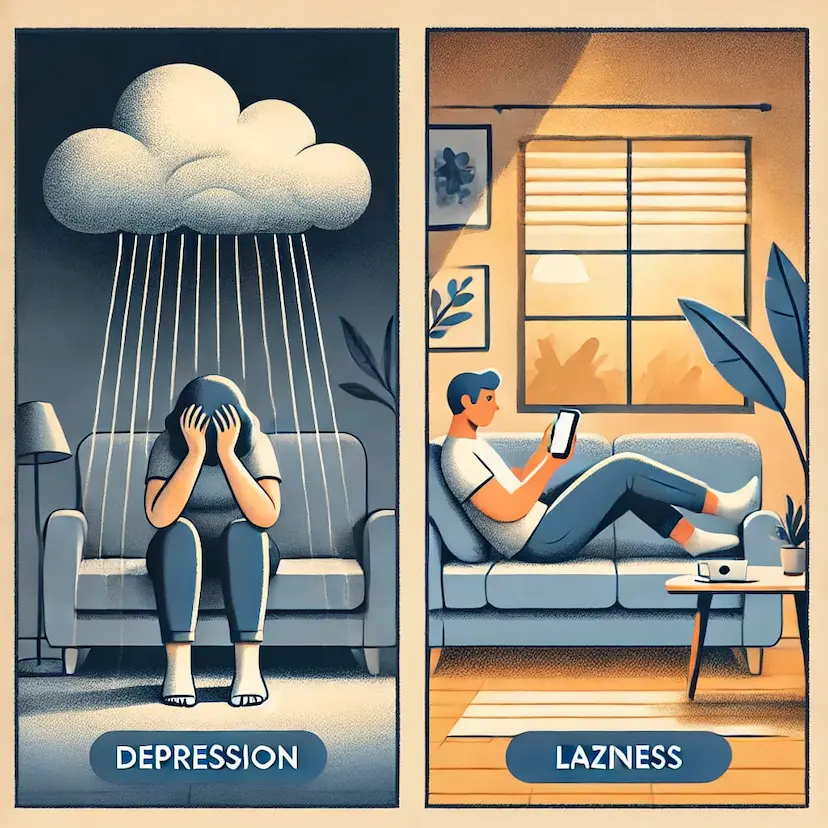
Am I Depressed or Just Lazy? Understanding the Difference
 March 17, 2025
 Understanding Laziness
Laziness is a term often used to describe a lack of motivation or unwillingness to exert effort. It’s a temporary state that everyone experiences. Maybe you skipped the gym or delayed starting a project at work. These moments are normal and don’t necessarily indicate a problem.
Key Points about Laziness:
- Situational: Often linked to specific tasks or circumstances.
- Temporary: Usually short-lived and resolves once motivation returns.
- Choice-Based: Involves a conscious decision to not engage in an activity.
Example: You’ve been feeling lazy because you stayed up late binge-watching a TV series. The next day, you might feel guilty but quickly get back to your routine.
Understanding Depression
Depression is a mental health condition that affects how you feel, think, and handle daily activities. It’s more than just feeling sad or unmotivated. Depression is persistent and can significantly impact your life.
Key Points about Depression:
- Persistent Feelings: Lasts for weeks, months, or even years.
- Emotional Symptoms: Sadness, hopelessness, and irritability.
- Physical Symptoms: Changes in appetite, sleep disturbances, and fatigue.
- Cognitive Symptoms: Difficulty concentrating, making decisions, or remembering things.
- Impact on Daily Life: Interferes with work, relationships, and responsibilities.Example: You’ve lost interest in activities you once enjoyed, feel constantly tired, and have trouble getting out of bed daily. These feelings persist and make it hard to function
How to Tell the Difference ?

What to Do If You’re Unsure
If you’re struggling to determine whether you’re just feeling lazy or dealing with depression, here are some steps you can take:
- Reflect on Your Feelings: Keep a journal of your emotions, energy levels, and activities.
- Assess the Impact: Consider how your current state affects your daily life and responsibilities.
- Seek Professional Help: A mental health professional can provide a diagnosis and guidance.
- Reach Out to Loved Ones: Talking to friends or family can offer support and perspective.
Feeling unmotivated from time to time is normal. However, if these feelings persist and interfere with your daily life, they may indicate more than a lack of motivation. Understanding the distinction between lethargy and depression is critical for taking the necessary actions to feel better.
Remember, asking for help demonstrates strength, not weakness. If you’re unsure about what you’re going through, don’t hesitate to contact a mental health expert. You deserve to feel your best, and there are resources and people available to help you.
March 17, 2025